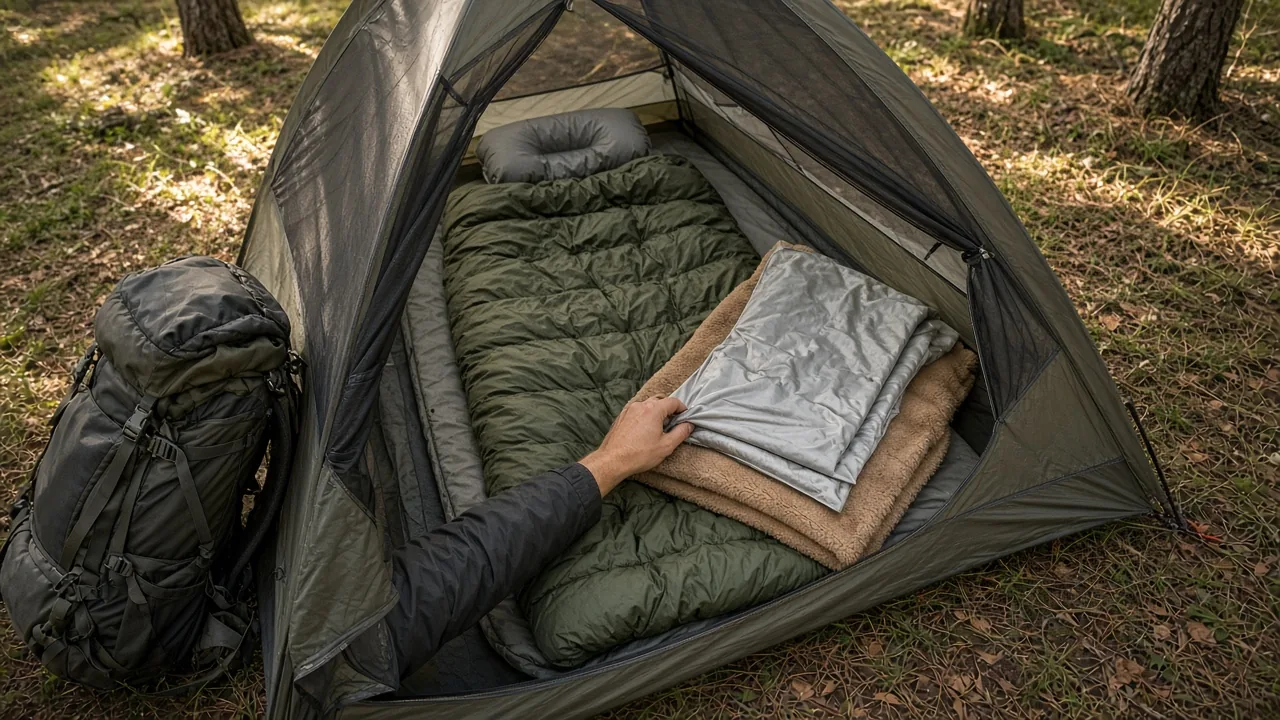
How to Clean Mold Off a Tent Without Ruining the Coating
Mold on a tent doesn’t always mean replacement. Learn how to clean mold off a tent safely, protect the waterproof coating, and prevent mildew from returning.
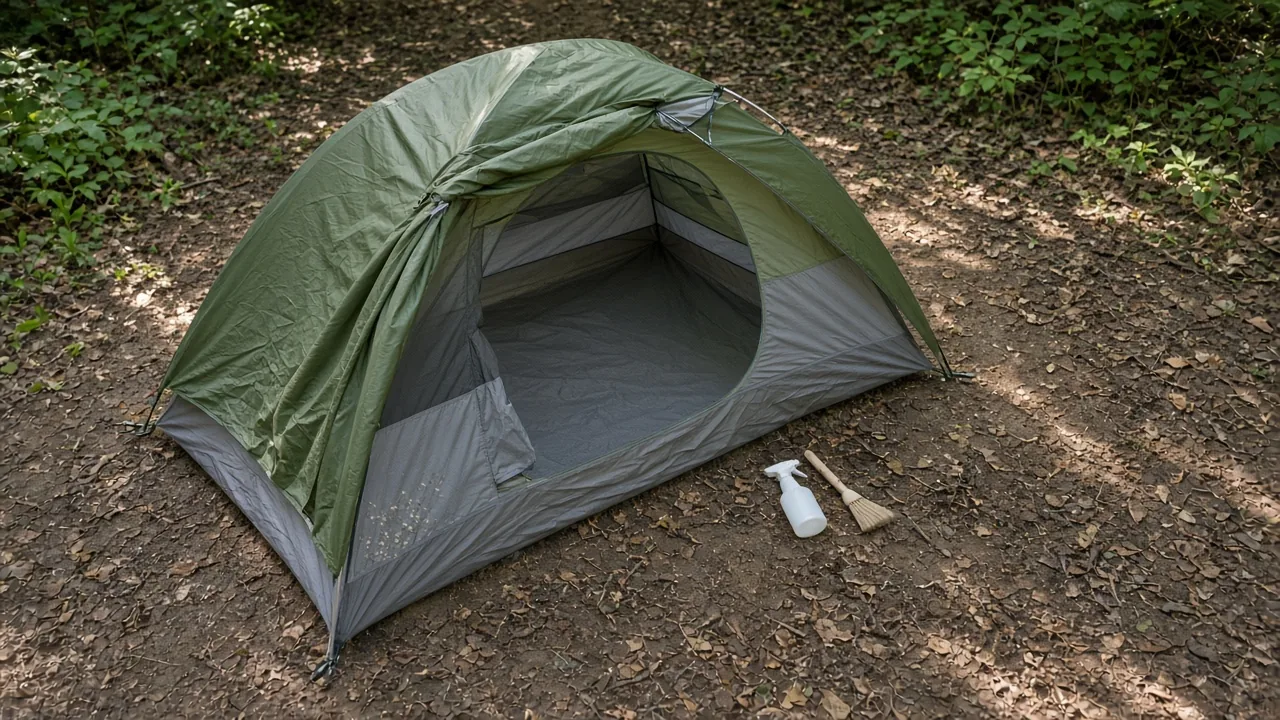
Mold on a tent is not always a reason to throw it out. If the mildew is still sitting on the surface and the waterproof coating has not turned sticky or cracked, learning how to clean mold off a tent is usually worth the effort. The job comes down to mild cleaners, shade drying, and a DWR refresh afterward. Deep mold that has made the fabric brittle or left dark stains through the weave is different; replacement may be the safer call.
Why Mold and Mildew Damage a Tent’s Waterproofing
Trapped moisture and mildew degrade polyurethane, or PU, coatings over time. That coating is what gives the floor and fly much of their water resistance, and it does not recover once it breaks down. When a wet tent sits packed for several days, condensation, body moisture, and rainwater get pressed into the fabric. Mold then feeds on the organic residue in the coating and the weave.
The damage can show up as a tacky feel, flaking, or a brittle surface that cracks along fold lines. Surface mold should be treated before it spreads into the weave, because once the coating becomes sticky or the fabric loses flexibility, cleaning will not restore the original strength.
Know the signs that cleaning is still worth trying
Light surface spots on a tent with an intact coating respond well to cleaning. You want to see mildew that sits on the face of the fabric rather than staining all the way through. The coating should still feel smooth enough to run a hand over without it grabbing or peeling.
Deep stains that leave the fabric brittle, sticky, or translucent in spots usually cannot be fully reversed. If the floor feels gummy even when dry, or the fly crinkles like old plastic, the PU layer has likely broken down. In that condition, aggressive cleaning can peel away what remains.
Check high-risk areas before you start
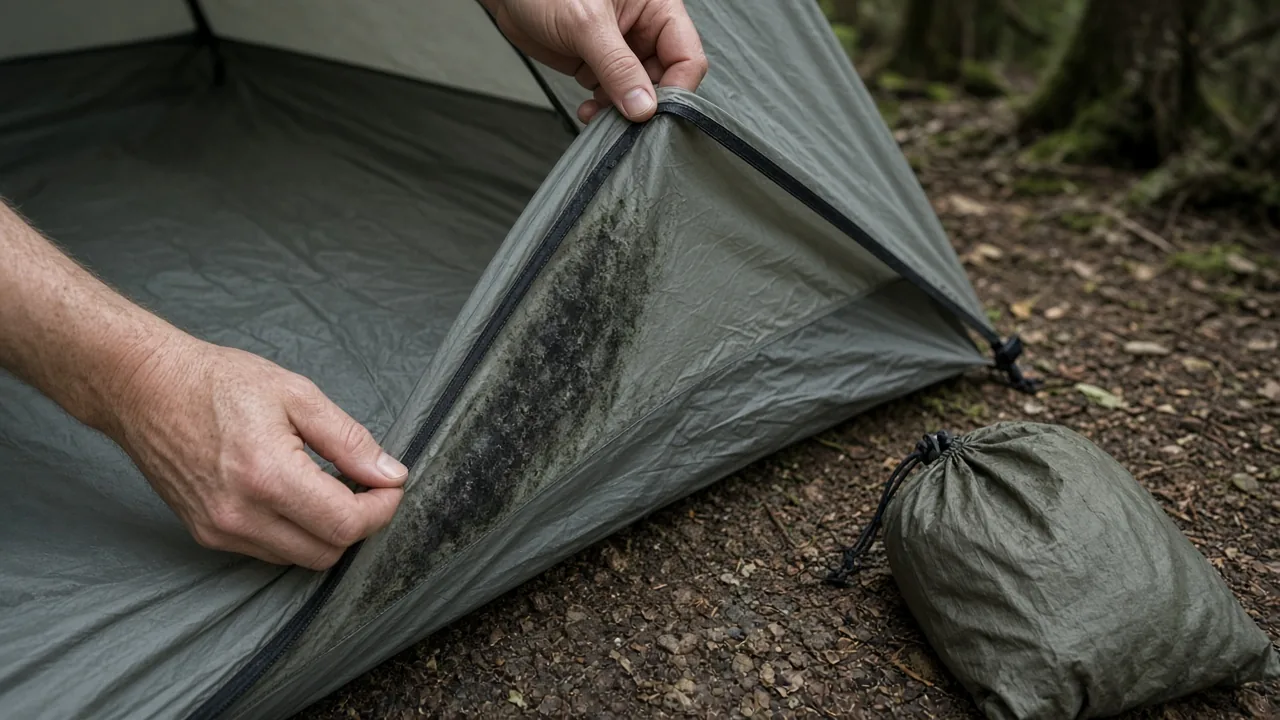
Before you commit to washing the whole tent, inspect the floor, corners, and any spot where condensation pooled after rain. Those areas mold first because they stay wet the longest and rarely get enough airflow. Also check the rainfly hem, the inside of the stuff sack, and seams near the bathtub floor.
If the mold is only in a few isolated patches and the rest of the fabric looks healthy, spot treatment is enough. If it runs along the entire floor or covers large sections of the fly, you are dealing with a bigger job, and you may need a full wash.
How to Clean Mold Off a Tent Safely
Work in a set order: prep the tent, spot-treat visible mold, hand-wash with a gentle cleaner, then get it fully dry in the shade. Keep it away from washing machines, dryers, and direct sun. Those shortcuts damage the waterproof layer faster than the mildew does.
Prep the tent and test the cleaner
Zip all doors and panels closed, remove the poles, and take out stakes and loose debris. Working with an empty shell keeps the fabric from twisting around the frame and gives you better access to seams. If you are cleaning a freestanding tent, set it up or lay it flat on a clean surface.
Before you treat any visible stains, test the cleaner on a hidden spot such as the bottom of the vestibule or a small area behind the door. A mildew remover or even a mild soap can fade some finishes or dye lots, so give it a few minutes and check for color transfer before moving on.
Spot-treat mold before full washing
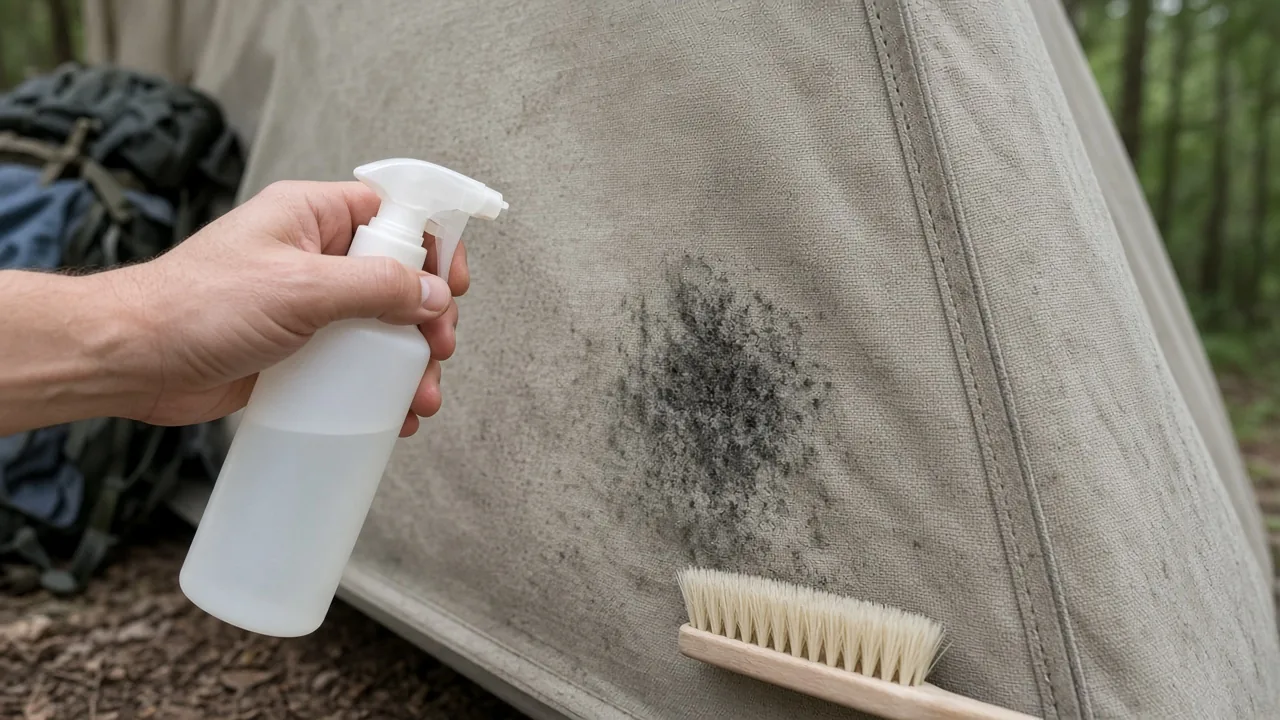
Spray a tent-safe mildew remover about 4 to 6 inches from the stain. Let it sit for 5 to 10 minutes, then scrub gently with a soft brush or sponge. The goal is to lift the mold without grinding it into the weave.
If the stain does not come out, repeat the spray-and-brush step. Do not switch to bleach or a stiff brush. Harsh chemicals and hard scrubbing strip the coating, and a damaged patch will let water in even if the rest of the tent looks clean.
Hand-wash with cool to lukewarm water
Fill a tub or large basin with cool to lukewarm water. You can use a small amount of mild dish soap or a tent-specific cleaner, but skip laundry powder and fabric softener. Soak the tent and gently knead it, keeping the rainfly included if the fly also has dirt or mildew.
Rinse the tent two or three times in clean water until no suds remain. Never machine wash or dry a tent. Heat and tumbling damage the waterproof layer, and a spin cycle can tear seams or bend zippers permanently.
Drying and Restoring Waterproofing After Cleaning
Dry the tent fully in shade with air movement, then refresh the DWR only after the fabric is clean and free of mildew. If you reapply waterproofing over leftover mold or soap residue, the spray will not bond well.
Air-dry without direct sun or heat
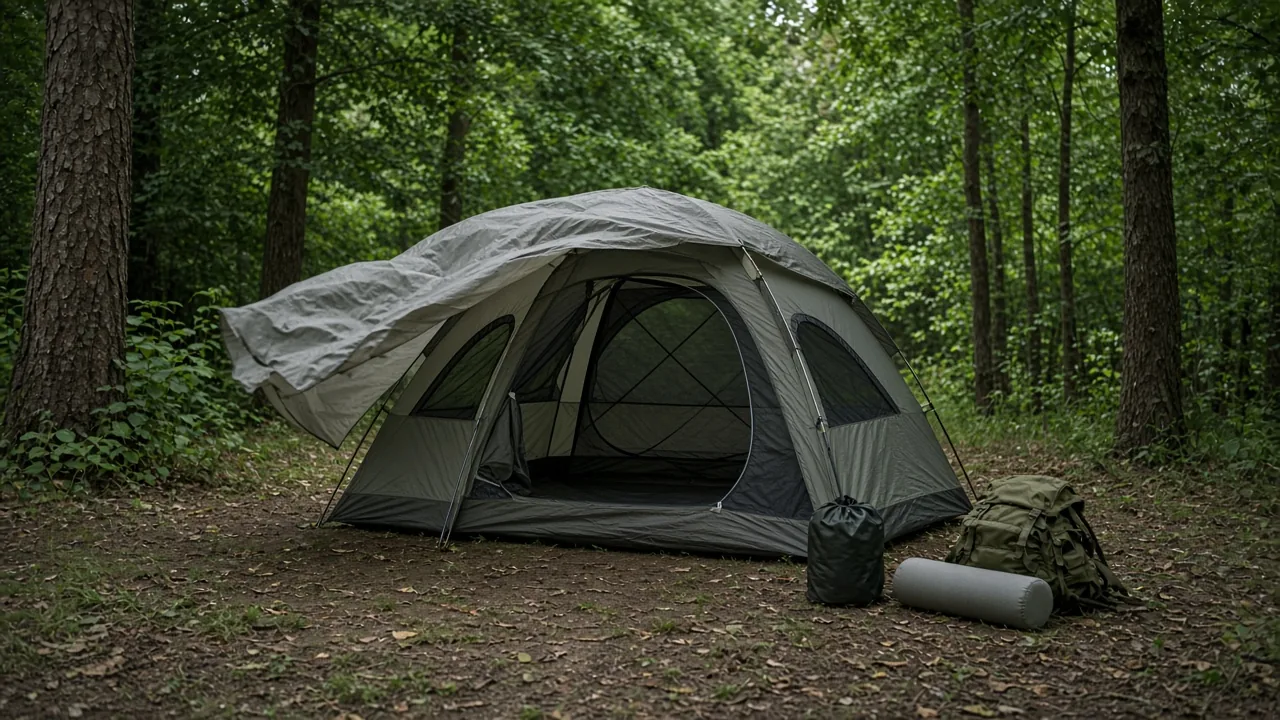
Open all vents and doors, and set the tent up loosely so air can move through it. Move it occasionally so both the inside and outside faces dry. Direct sun can overheat PU and blackout coatings, so keep it in the shade or under a covered area.
Never use a stove or heater inside your tent to speed drying. That creates carbon monoxide and fire risk, and the concentrated heat can damage the fabric. If you are drying indoors, a fan pointed at the tent from outside is a better option.
Reapply DWR after the tent is clean
Apply a waterproofing spray while the fabric is slightly damp or fully dry, depending on the product's instructions. Two light coats usually work better than one heavy coat because the spray spreads more evenly and does not seal the breathable surface.
Let the first coat dry before adding the second. DWR does not repair holes or delaminated coating, but it restores water beading after mold removal and gives the fly and floor a useful refresh.
Cleaning Products and Methods Compared
Match the cleaner to the stain. Mild dish soap works for light dirt, tent-specific cleaner is the safest all-purpose choice, and mildew remover targets mold. Avoid bleach, fabric softener, and kitchen degreasers.
| Product or method | Best use | Waterproofing risk | Car camping vs backpacking notes |
|---|---|---|---|
| Plain water rinse | Dust, surface dirt | Very low | Good first step for either tent type |
| Mild dish soap, small amount | Light dirt, body oils | Low, but rinse thoroughly | Easy to source; use less for ultralight backpacking fabric |
| Tent-specific cleaner | General cleaning | Low | Best all-around for coated floors and flies |
| Mildew remover spray | Surface mold spots | Moderate if overused | Spot-treat only; keep away from seam tape |
| Isopropyl alcohol on a cloth | Tree sap | Moderate if rubbed hard | Use only on small spots |
| DWR spray | Post-clean water beading | None when applied correctly | More important for rain-heavy backpacking trips |
What to skip when cleaning tent fabric
Do not use bleach, laundry powder, fabric softener, or strong household cleaners. Those products can dissolve or strip the PU coating, and the damage may not be visible until the tent is wet again. Kitchen degreasers and toilet-bowl cleaners are even harsher.
A soft sponge or brush is fine, but avoid anything abrasive. The coating is thinner at fold lines and seam edges, so those areas wear through first under aggressive scrubbing.
Why machine washing is not worth the shortcut
A washing machine may save effort, but the agitation, spin, and heat can tear seams, ruin zippers, and degrade the waterproof layer. Even a front-loading machine without a center agitator still flexes and tumbles the fabric more than a tent should move.
Dryers are worse. The heat plus tumbling can shrink panels, melt seam tape, and crack the coating. A bathtub rinse takes longer, but it is the only method that does not trade cleaning time for shortened tent life.
Who Should Clean and Who Should Replace
Cleaning suits tents with shallow mildew and an intact coating. If the fabric is sticky, brittle, or deeply stained through the weave, the safer call is replacement. A heavily molded tent can also leave behind spores that irritate your airways, so the issue is not only cosmetic.
Some campers report using a tent for years with little more than spot cleaning. That usually works only when the tent was never packed wet. If mildew has already started, the damage compounds quickly because the coating loses its protective surface.
Car camping vs backpacking after mold treatment
Large car-camping tents need more shaded drying space. A family tent may not fit in a bathtub, so you may need to set it up on a deck or in a garage and spot-clean the affected panels instead of soaking the whole thing.
Backpacking tents need loose storage that does not compress the fabric or coating. If a lightweight tent has deep mold and brittle fabric, replacement matters more because you depend on every ounce of weight and packed size when you are carrying it.
Preventing Mold After You Remove It
Change your packing routine instead of relying on repeated deep cleaning. Dry the tent completely after every wet trip, store it loose in a cool dry place, and air it out monthly during long storage periods.
Store it dry, loose, and away from heat
Skip the tight stuff sack or store the tent in a breathable bin. The original compression sack forces the fabric into the same creases and keeps any residual moisture pressed against the coating. A larger cotton bag or a ventilated plastic bin works better.
Keep the tent in a cool, dry area and add desiccant in humid months. Avoid attics, garages that heat up, or any spot that gets direct sun through a window. Heat and moisture together are what push a clean tent back toward mildew.
Air out wet tents before packing
After rain, open the tent in shade and wipe corners, straps, and seams. Pay attention to the floor edge and the underside of the rainfly. A wet tent packed for three days can start molding, especially in warm weather.
Before the next trip, check fire restrictions, campsite rules, and the forecast so you are not packing a wet tent at the last minute. If the tent must go into a stuff sack while damp, unpack it as soon as you get home and set it up to dry.
If cleaning leaves the tent dry and the coating intact, the tent is worth packing. Decide based on whether you are car camping or backpacking, how cold the nights get, and whether rain is forecast. If the fabric remains sticky, brittle, or deeply stained after treatment, replacement is the more reliable choice.
— Camp Kit Journal Editorial Team
This article is general information about camping gear, not professional safety, medical, or wilderness training. Check fire restrictions, weather, and campsite rules before you go, and follow the manufacturer's instructions for your own equipment.
FAQ
Can I use bleach to clean mold off a tent?
No. Bleach and harsh chemicals can strip the waterproof coating. Use a tent-safe mildew remover or mild dish soap instead.
Is it safe to machine wash a moldy tent?
No. Machine washing and drying can damage the waterproof layer, tear seams, and bend zippers. Hand-wash in a tub and air-dry in shade.
How do I prevent mold from coming back on my tent?
Dry the tent completely after every wet trip, store it loose in a cool dry place, and air it out monthly during long storage.
When should I replace a moldy tent instead of cleaning it?
Replace the tent if the fabric is sticky, brittle, or deeply stained through the weave, or if the waterproof coating has flaked or cracked.
Can I reapply waterproofing after cleaning mold off a tent?
Yes, but only after the tent is clean and free of mildew and soap residue. Apply DWR spray in light coats while the fabric is damp or dry according to product instructions.